The Argentine message is clear: unequivocal support for the operation that ended with the capture of Maduro and full willingness to collaborate in the political redesign of Venezuela, without interfering in the strategic decisions that the United States may make.
Sources consulted: Official statements from the Presidency of the Nation; communications from the U.S. Department of State; public statements by Donald Trump and Marco Rubio; diplomatic information provided by the Argentine embassy in Washington; reports from international agencies and regional media.
In the Casa Rosada, a low-profile communication strategy and a marked alignment with Washington prevail, under the conviction that the political outcome in Caracas will depend almost exclusively on the negotiations that the Donald Trump administration maintains with the remnants of chavist power.
After the first public statements made on the Saturday following the operation, the President and his inner circle opted for a “wait and see” approach.
At the Casa Rosada, they interpret that Washington's discourse will be modulated according to the internal response of chavism and the behavior of the Venezuelan Armed Forces.
One of the certainties held by the Argentine government is that the White House has chosen Delcy Rodríguez as the central figure in the transition process.
However, this stance has been adjusted following statements by Trump that downplayed the role of the former opposition candidate and questioned Machado's ability to lead the country at this stage.
Behind closed doors, the interpretation imposed at the Casa Rosada is harsher: Maduro built a parallel state, with deep loyalties in political, business, and military sectors.
Rodríguez is seen as a pragmatic leader within the regime, with a track record of softening some socialist policies, which would explain the U.S. decision to grant her a limited but concrete margin for maneuver.
Argentina, however, avoids direct involvement in these definitions.
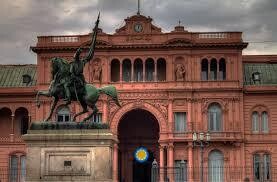
From Balcarce 50, they insist that Argentina will accompany “without nuances” the path marked by the United States.
On the very Saturday of Maduro's capture, Trump had affirmed that his country would “govern” Venezuela, a phrase that caused diplomatic noise and was later qualified by Secretary of State Marco Rubio.
Milei himself had even stated that González Urrutia had won the elections and had a legitimate mandate.
Therefore, they understand that any exit must be gradual and negotiated, with the participation of different opposition actors at a later stage.
Meanwhile, the Argentine government is closely following the reaction of the Venezuelan Armed Forces, especially Defense Minister Vladimir Padrino López, who in recent hours demanded Maduro's release and denounced a supposed “U.S. colonialism.”
They agree with Rubio that the window of opportunity is limited, to weeks or a few months, and that the decisions made during that period will be decisive.
In this context, Milei does not maintain formal contacts with Machado or González Urrutia, although permanent exchanges with the Trump administration, the U.S. Congress, and various think tanks have been confirmed.
In this framework, they emphasize that the Casa Rosada is the only government in the region willing to such explicit cooperation with the White House.
In the hours following the operation, the Argentine Executive had suggested that figures like María Corina Machado and Edmundo González Urrutia should play a relevant role in the short term.
From the government leadership, they stress that the ultimate goal is to collaborate so that, once the transition is resolved, Venezuela can move towards a democratic and republican government.
In Buenos Aires, they are observing whether Delcy Rodríguez can distance herself from that hard line or end up subordinate to military pressure.
Officials with fluid dialogue with Washington believe that, despite the tension, a transition agreement is taking shape and, for now, they rule out a new wave of attacks.
In Milei's circle, they believe that Washington is betting on his ability to understand and execute economic reforms that facilitate a controlled opening, with incentives linked to oil investments.
Buenos Aires, January 5, 2026 – Total News Agency-TNA-The government of Javier Milei is going through hours of extreme caution in its assessment of the future of chavism in Venezuela, following the capture and extraction of Nicolás Maduro and his wife, Cilia Flores, in an operation led by the United States.
Milei limited himself to expressing his full support for the decisions that the United States may make and made it clear that if Washington requires political or diplomatic support, “it will have it.”
The head of U.S. diplomacy spoke of a kind of “quarantine” for the military and energy sector, especially regarding oil exports, as a tool to pressure the new political leadership beginning to take shape in Caracas.
High-ranking officials maintain that the signals have already been given and that a sensitive stage now opens, in which any rushed definition could alter a transition process that they consider fragile and still under construction. Abruptly placing a leader without a real anchor in those structures could lead to a chaotic scenario.